Sunday, October 7, 2012

The Rain in Spain (falls mainly when I visit)

Not just an ordinary bakery, but a "bread boutique."
I planned this Spanish getaway in a last-ditch effort to relax beneath a fiery sun before the cold, gray winter sets in up here near the North Pole.

Ha ha. I could practically hear the weather fairies guffawing as I rode the drafty RER to the airport.

Who is this Santa Aurelia and what's her story? Still figuring it out.
I arrived on my "Saint Day" (a catholic thing, I think), which I believe should entitle the namesake to the weather of her preference. To be fair, that first afternoon, it was about 80 degrees and I did spend an hour or so sitting in a swimsuit on the beach, staring out to sea and imagining that the clouds rolling in from the south east were actually just passing through, and not settling in for a multi-day rain-fest.

"You've brought us good luck," said Mario, my Airbnb host. "It never rains like this in September, and we really needed it after months of drought."


The letterbox belonging to an average house on an average street in Malaga. Pretty!
The hibiscus and other tropical flowers didn't seem to mind the rain.
A fanciful stone walkway--one of many throughout the old city of Malaga.  
My daily Spanish breakfast
Public gardens teeming with fruit-laden lime trees.
So, what's a girl to do when she's stuck in a drizzly Mediterranean town in late September with four free days all to herself? Museums. Restaurants. Cafes. Long walks on slippery cobblestones beneath a borrowed umbrella. It wasn't exactly the balmy Andulician holiday I was yearning for, but it was still pretty OK.

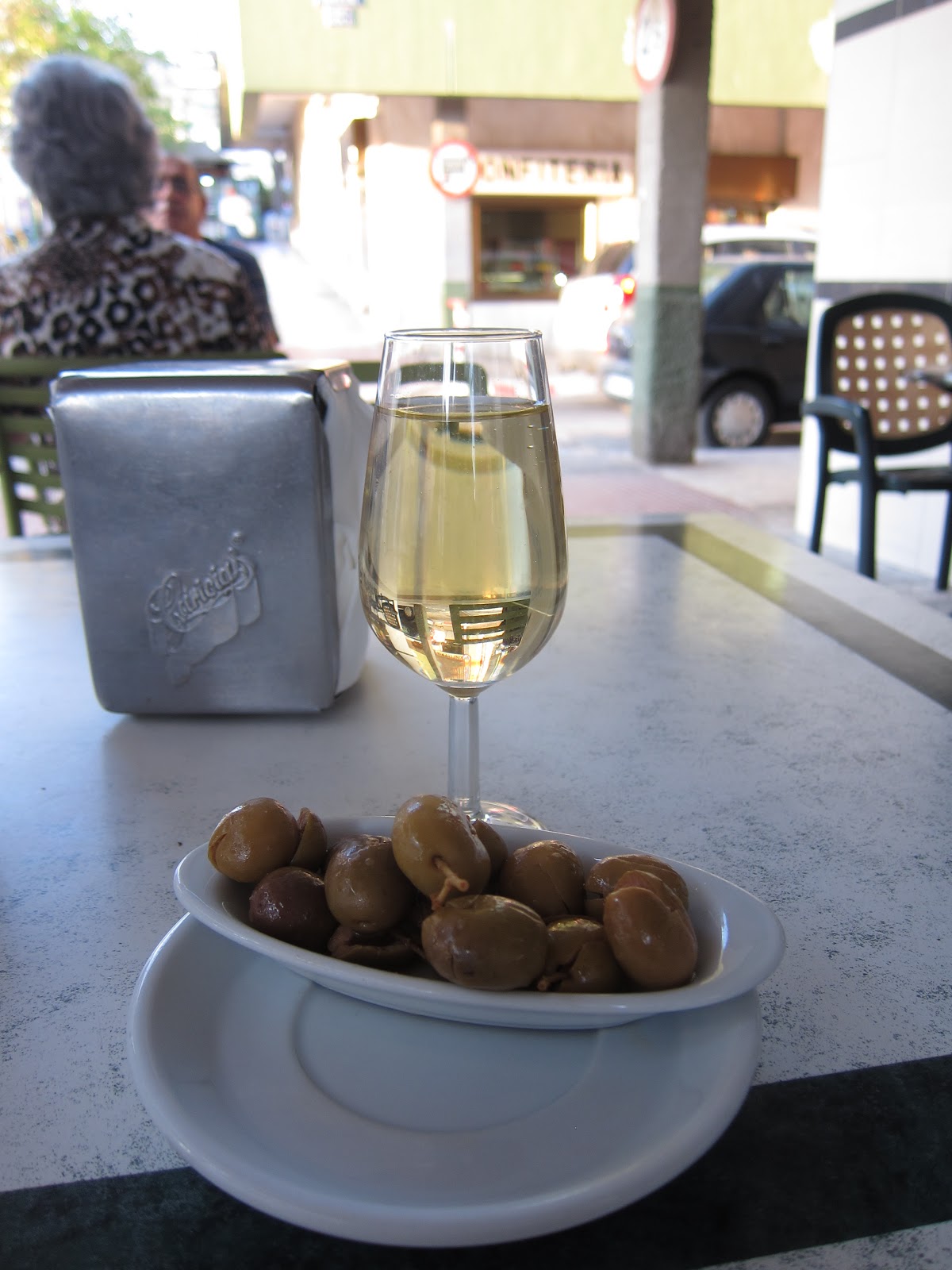
Malaga is the city where Pablo Picasso was born (oh, and Antonio Banderas, too), and, as seems fitting, there are two museums dedicated to Picasso's life and work; I went to both. (If there was an Antonio Banderas museum, I never found it.) There are also museums dedicated to flamenco, wine, and modern art, among many, many others. I visited as many as I could--usually two or three each day, breaking for a long lunch in between, then mixed things up a bit by popping into covered markets, the occasional vintage clothing store, and cafes where salty nibbly things are always served with your glass of €1.50 vino dulce.

A typical afternoon apero.
A walkway to who-knows-where.
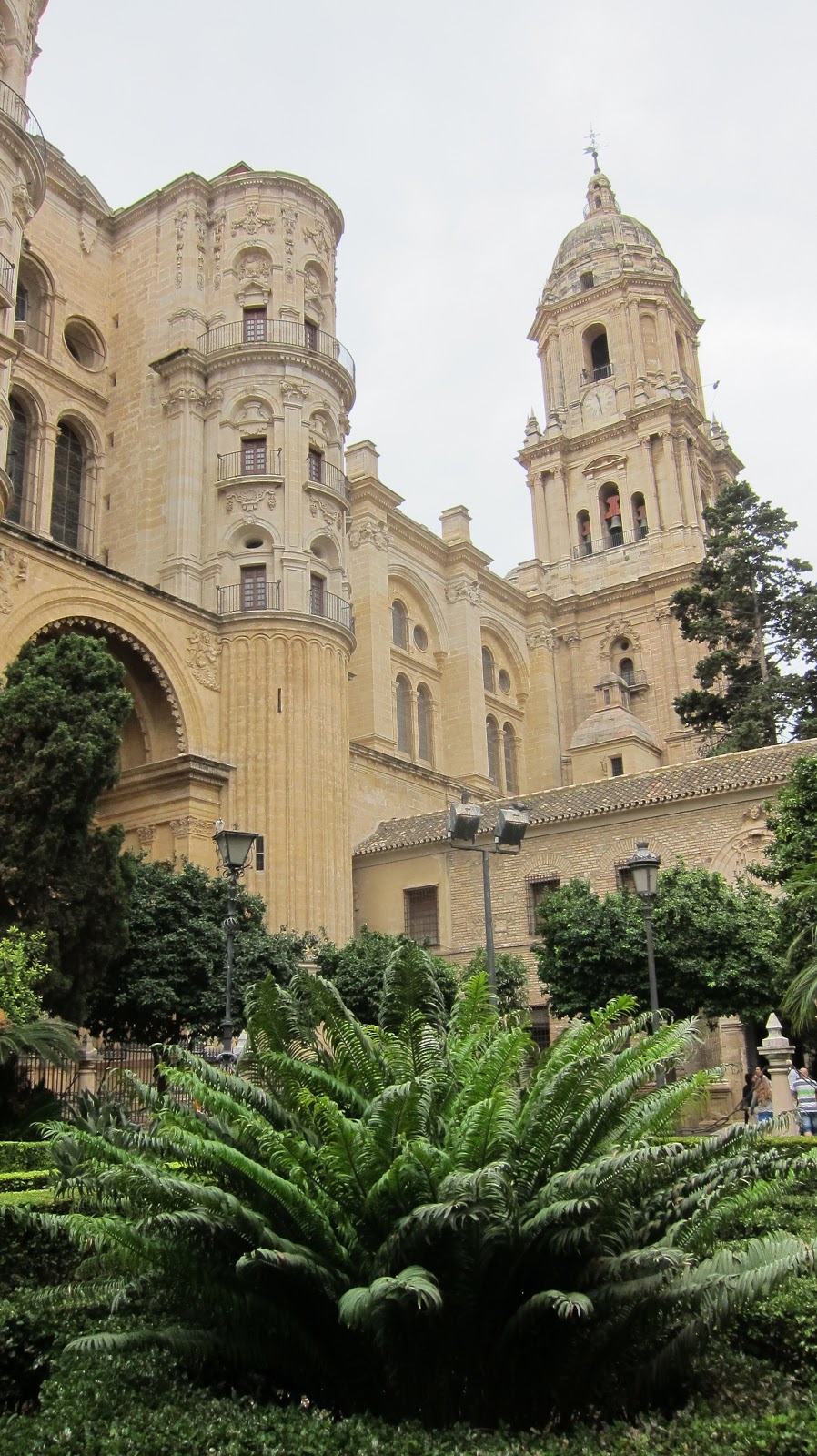
The old cathedral, built in architectural styles spanning the centuries. It's still not finished! (The church keeps running out of money. Ahem.)
I bought a kilo of these delicious clementines from another stall and paid €.50. My kinda prices
Inside Malaga's Altarazana market, which dates back to the 14th century. Avoid the fish and meat aisles if you can; the fruits, veggies, olives, nuts, and other goodies are off to the right side. 
Funny olives stuffed with pickles. Mmm .... different!
A little organic stall inside the covered market.
Lunch at Loving Hut. They're everywhere, and I'm pretty happy about it! 
The vast white gallery inside the museum of modern art. I loved this place!
In the courtyard of the Museo de Artes Y Costumbres Populares.
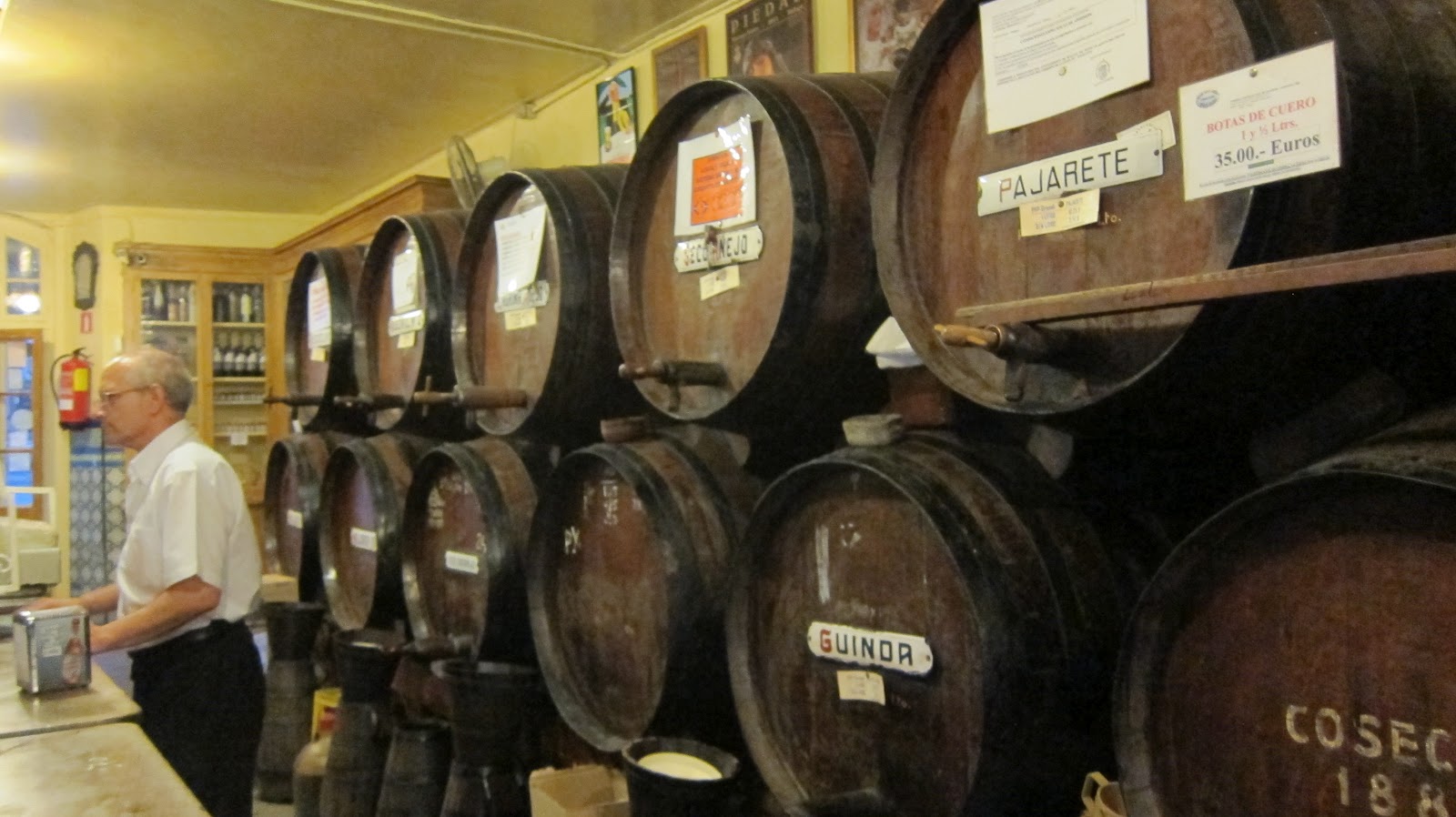
Sampling the local wines at a popular watering hole. Your tab is written in chalk on the counter top.
Barrels and barrels and more barrels of local wine. All sweet. Very sweet! And delish.
One of more than a dozen flamenco-costume shops clustered in the north of town; this one geared toward the (really) young set.
Spain has a lot going for it: The people are friendly and good humored, the architecture is interesting and varied, the dining scene wasn't the giant pork-fest I'd been warned it was, and, I imagine, the beaches are even more beautiful when bathed in sunlight. Before my next trip, I will definitely consult with the meteorologists and, to be extra safe, I'll aim for a mid-summer sojourn. But I will likely keep to the same sort of itinerary, crammed with wonderful art, delicious food, and wide-eyed wanderings through tradition-soaked towns.

A fanciful wrought-iron gate in north Malaga. 
The lunch possibilities at El Piano, one of two vegan restaurants in Malaga.
And for dessert, we have ... lots of yummy-looking things that I did not try.
My lunch.
I never knew San Miguel was a Spanish beer. There's a giant brewery near the airport, where they may or may not make their "Eco" cerveza. 

The soy yogurt selection at the supermarket.

Cauliflower soup at El Calafate

Afternoon hot-chocolate break.

con churro! (Singular--those things are deep-fried and dangerous--one was plenty.)
La playa at moonrise on my penultimate day.
Fake meat in a can! Woot!

Why, si, yo gusto bien un otro vino bianco. Gracias.
A Spanish sunset.

Friday, October 5, 2012

The Great B12 Debate

Author, speaker, and nutrition expert Vesanto Melina,
looking fabulous at 70!
The Association Vegetarienne de France recently hosted a lecture by respected vegan-health expert and author Vesanto Melina. Vesanto has written and co-authored many books on the subject of eating healthfully on a plant-based diet, including the titles Becoming Vegan and Becoming Vegetarian.

The one-hour presentation--centered on vegan-nutrition fundamentals--was given in English, with two french translators hard at work for the mostly francophone audience. I would guess that there were more than 100 people in attendance. Pretty good for a Wednesday night in Paris!

The B12-curious audience.
Vesanto used her warm and engaging personality to dispel myths and educate us on key issues relating to vegan diets, then turned the mic over to the audience, who had plenty of questions. All. About. B. 12.

B12!

One of the information tables at the Paris event.
There are, apparently, a lot of unanswered questions about B12. Can we get it from nutritional yeast? What about sea vegetables?  I've heard mushrooms have B12. How about spirulina?

NO!

Well, micro-amounts at best, but not enough to meet our bodies' B12 needs. If you're vegan, it's time to face facts, she said, more or less. You need to take a B12 supplement.

Vesanto and her translation team on stage.
In the past, I've taken B12 supplements--sublingual drops and tablets, and regular ol' vitamin-style pellets--but found that whenever I'd take them, I'd get insta-acne. Weird. Vanity triumphed over any health concerns I had, so I stopped taking it and simply increased the already-bountiful quantities of Marmite and nutritional yeast I was eating.

B12 deficiency at its most extreme results in severe damage to the nervous system. Symptoms include numb fingers and toes (I have this a lot, but chalked it up to "poor circulation"), depression, and memory loss. Ouch!

Are you vegan? Do you take a B12 supplement? What's the experience been like for you, before and after starting to supplement?

After introducing myself to Vesanto, she told me she was using
my latest article in VegNews Magazine to help her navigate
the vegan scene in the City of Light. What an honor!

Monday, October 1, 2012

KALE, yes!

(You have to say it with a southern accent.)


There isn't much I miss about life in the United States, but kale is definitely one of them. Anyone within shouting distance has heard me lamenting the dearth of this beloved cruciferous green here in l'Hexagone. It's not like I haven't tried to source it, either. I've been to scads of markets and talked to oodles of vendors, half of whom had no idea what the hell I was talking about. "Kale? C'est quoi, ca?" or "Bah, non" were the consistent replies to my sad-eyed queries.

More than a year ago, my friend Nathalie suggested we go to an AMAP (Associations pour le Maintien d'une Agriculture Paysanne) event on Canal de l'Ourcq and talk to actual farmers to see if they'd be willing to consider growing it. One fellow expressed an interest, but only if we had enough people to make it worth his while. He needed a commitment of 30 people, which was about triple the number of people I actually new in the city. I gave up. I figured I could eat collard greens and gai lan--also known as Chinese kale--until I was back in the land of the red, white, and greens.


Back in June, on a trip to London, I picked up two bunches of kale (all I had room for) at a Whole Foods market and ferried them back home on the Eurostar. Reacquainting myself with this this old edible friend only amplified the longing for it; would it be reasonable to consider quitting France simply to gain better access to my beloved vegetable? The kale-obsessed quadrant of my brain said "oui."

Then, nearly without warning, un petit miracle: My friend and fellow expat Karin introduced me to Kristen, another kale-loving American. The difference between my love of kale and Kristen's is that this girl didn't just whinge about the no-kale situation; she actually embarked on a no-stopping-until-success mission she dubbed The Kale Project to bring the damn stuff to France. In September, her efforts made so many wishful thinkers' dreams come true: She got the farmers to grow it, and now it's being sold at a few outdoor markets in gay, gay Paree. Hallelujah! Praise Kristen!


Kale had its coming-out party at Verjus, a lovely little restaurant owned by a pair of (yep, you guessed it) expat Americans. The restaurant is the current darling of the Parisian "modern French" dining scene, and I'd wanted to check it out ever since discovering they'll do a vegan menu with a bit of advance warning. I gave absolutely no advance warning when I showed up asking for something kale-ish and vegan. (If you assumed, wrongly, as I did, that a kale menu implied there would already be something vegan, you would have been, as I was, saddened to discover otherwise.) The good news was that the wonderful chef busted out an impromptu kale gaspacho that totally exceeded my taste-bud's expectations. You really can't go wrong when you mix kale with heirloom tomatoes, smoked almonds, fennel, and onions.


A freelance reporter for the New York Times turned up for the event, as did a lot of pretty, blonde young things who look like they'd gone a long time without eating kale--or any other kind of food. But the star of the show was definitely Kristen, the kale messiah of the vegetable-loving Parisian masses. Where will I be this Sunday? At "church," otherwise known as the outdoor market, giving thanks for kale.

Monday, August 13, 2012

Chocolate Bliss

The source of Micah's smile? I'm guessing it's his magical chocolates.

I'd have eaten the whole tray if I wasn't in civilized company. 
One of the best things about being a writer is the inevitable learning process that each new assignment becomes. You can't help but absorb information and expand your horizons when you're researching and writing about new things. Take chocolate, for instance.

OK: I already knew a thing or two about chocolate. Mostly, that I like the way it tastes. In France, there is no shortage of dark chocolate for vegans to indulge in, so I do it regularly (as in every single day). And with the opening of Un Monde Vegan, I even have access to white chocolate, and non-dairy-milk chocolate. C'est magnifique. But I digress.

Last month I was invited to attend a chocolate-making class by a visiting American and fellow vegan who would be teaching three workshops in Europe. Two of them happened to be in Paris, and while I didn't have a specific story in mind for this experience, I figured I'd come up with something. (I eventually did.)

One of a few "super" ingredients that give these chocolates that
extra  special something.

It's hard to let go when the chocolate tastes this good.

Micah and fellow raw chocalatier Frederic Marr turn on the handsome,
just like that.

On a balmy July afternoon I cycled across town to ChocoLatitudes, a new-to-me chocolate boutique on a quiet street tucked between Montparnasse Tower and Montparnasse cemetery. I arrived just in time for introductions; there were approximately 10 of us, an equal mix of Anglophones, Francophones, and one Italian to round things out. Initially, I sat myself at the back, thinking that since I was here to observe and report, I wouldn't need to be in the thick of the action. Laurence, ChocoLatitudes' owner, thought otherwise, and positioned me in a front-row-center sort of spot, with awesome views of the chocolate yumminess and the choco-maestro himself, Micah Intrator.


Enter ChocoLatitudes if you dare to be tempted by chocoholicism.

One of many vegan treats that await at ChocoLatitudes.

Laurence, fellow vegan and ChocoLatitudes' lovely owner.
Micah began dabbling in chocolate-making several years ago, mostly as an experiment. He wanted to package all the goodness of the superfood smoothies he made for himself each morning into a compact, portable form that would allow him easy access to sustained energy throughout the day. Turns out chocolate was the perfect vehicle. Today, he makes exquisite confections and sells them at artisan shops in and around his hometown of Chapel Hill, NC.

I won't stop staring until you let us taste.

How long until those are ready?

Throughout the two-hour class, Micah tutored us in the fine art of chocolatiering, making it look easy, fun, and kinda cool--in spite of the goji berries. Using interesting and unfamiliar  (to me) ingredients such as maca, mesquite, and lucuma, he created some of the best-tasting stuff I've ever had the joy of devouring. As a "reporter," I hadn't anticipated active participation, but all professionalism fell by the wayside when the samples started making their way around the room.

With the first taste, I morphed into ChocoMonster.  Hadn''t Neal Barnard written in one of his books that chocolate (like cheese) has opioid properties that mimic the same intoxicating feeling you get from heroin? This chocolate was so intense I could practically feel the opioids rolling around in my mouth. Especially in the Chocolate Caramel Crunch bars. Heaven on a stick. (Without the stick.)


The Italian contingency sampling the secret ingredients.

Stepping out into the street after the workshop, I had the sensation of soaring on a chocolate-covered cloud--one from which I hoped never to descend. I finally did, though, hours later. And since then, I've been dreaming about those chocolates, and remembering that chocolate high with a bittersweetness matched only by the dark, chocolately goodness of those magical confections.